Why PP Injection Molded Cups Crack and How We Reduce the Risk
Why PP Injection Molded Cups Crack and How We Reduce the Risk
A factory guide for beverage brands, packaging distributors and importers
Xin Oasis | Factory insights
Open a carton and find three split rims in one sleeve. A lid may still seem to click into place, yet a gap at the damaged edge can leak on the way to the customer.
The receiving team now has to work through the rest of the carton before it knows how many cups can go into service.
After 12 years of exporting, Xin Oasis has learned to work backward from that moment. We start with the drink and closure, trial the PP formulation, inspect the molded rim,
then assess how the cups sit inside a shipping carton. Each decision can affect what your team finds on arrival.
Start with the drink and the lid
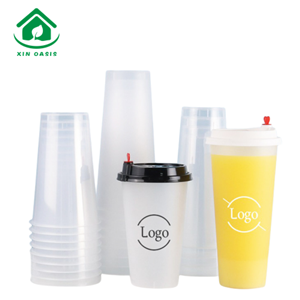
When a buyer asks for custom plastic cups, we start with how the store will use them. A bubble tea shop may use a heat sealer, while an iced coffee chain may snap on a sip lid.
Both need the right mouth diameter and rim profile.
A cup can have the correct capacity and still slow service if staff must press hard to close it or pull stuck cups apart.
Choose the formulation around the way the cup is used
Virgin polypropylene (PP) is the main resin. For cups that need more impact resistance, we can trial a polyolefin elastomer (POE) modifier.
A suitable blend can help the wall flex under a load that might otherwise start a crack. We also check that the finished rim stays stiff enough to hold the chosen lid.
The modifier in the formulation described here costs more than the base PP resin. Adding it increases material cost and can introduce slight haze,
depending on the blend. That tradeoff matters for clear plastic cups used to display layered drinks. A buyer considering a frosted PP cup can judge toughness, stiffness and appearance together using samples.
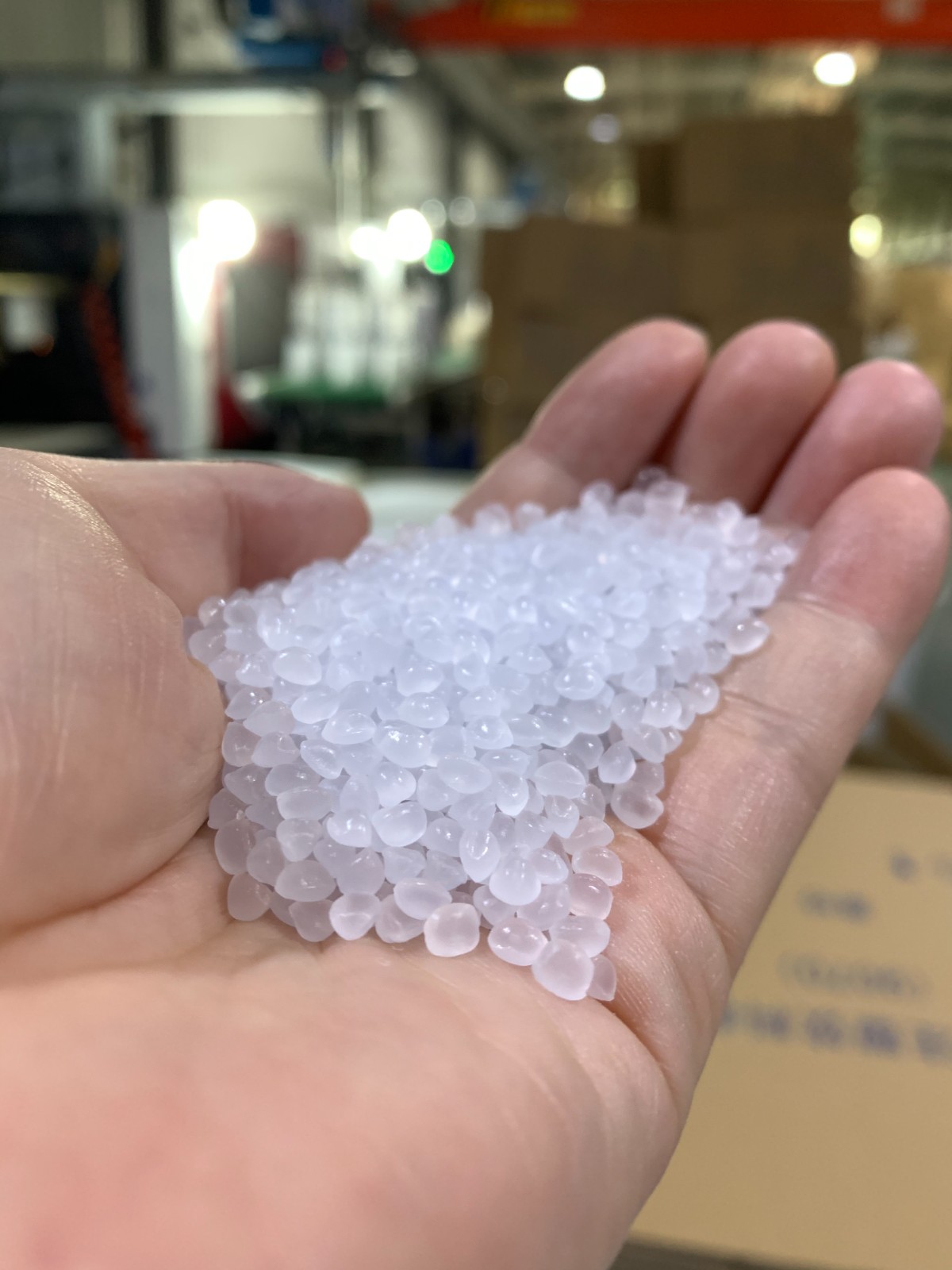
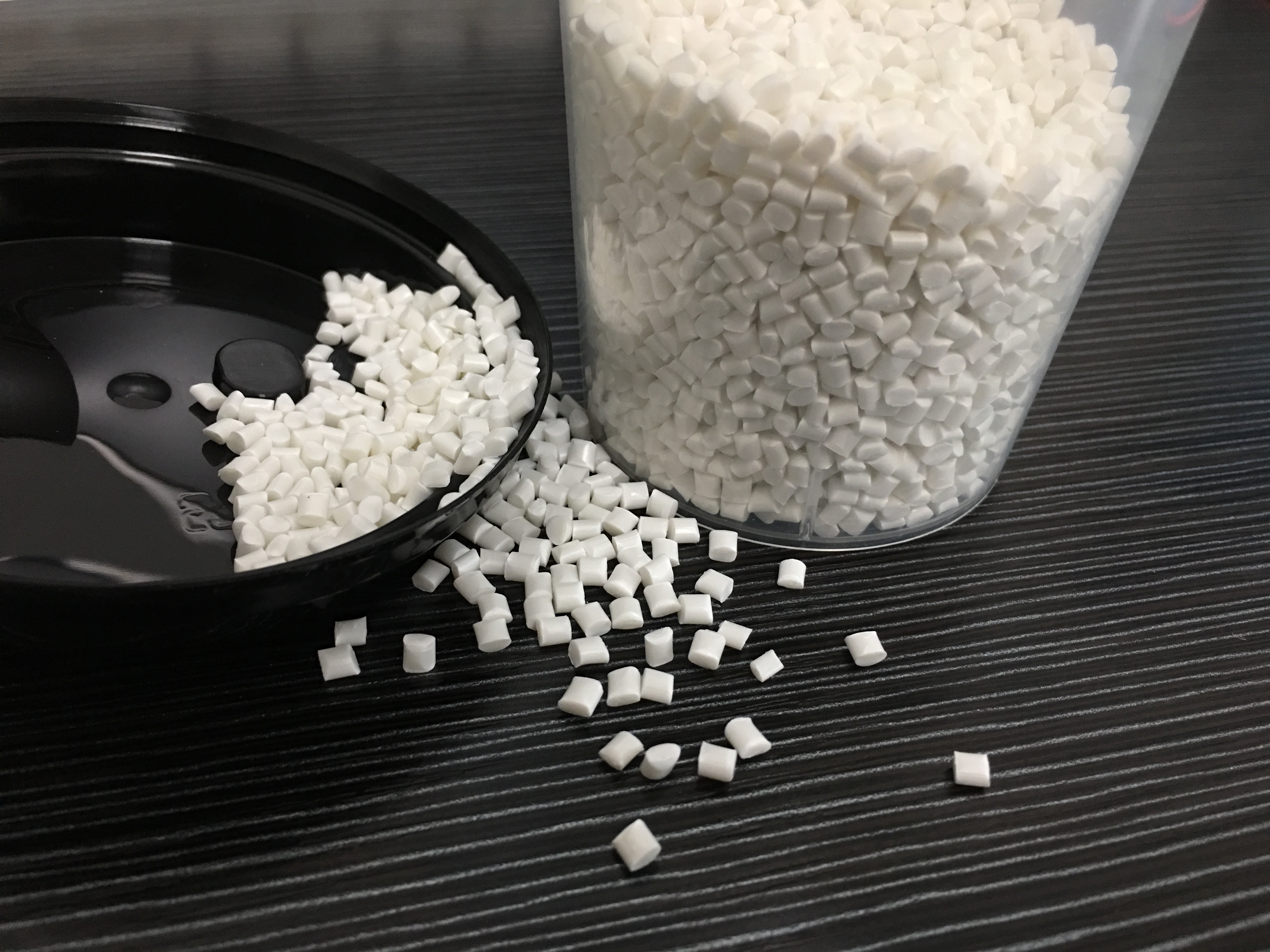
Virgin PP resin on the left and POE impact modifier on the right.
*Watch what happens at the mold
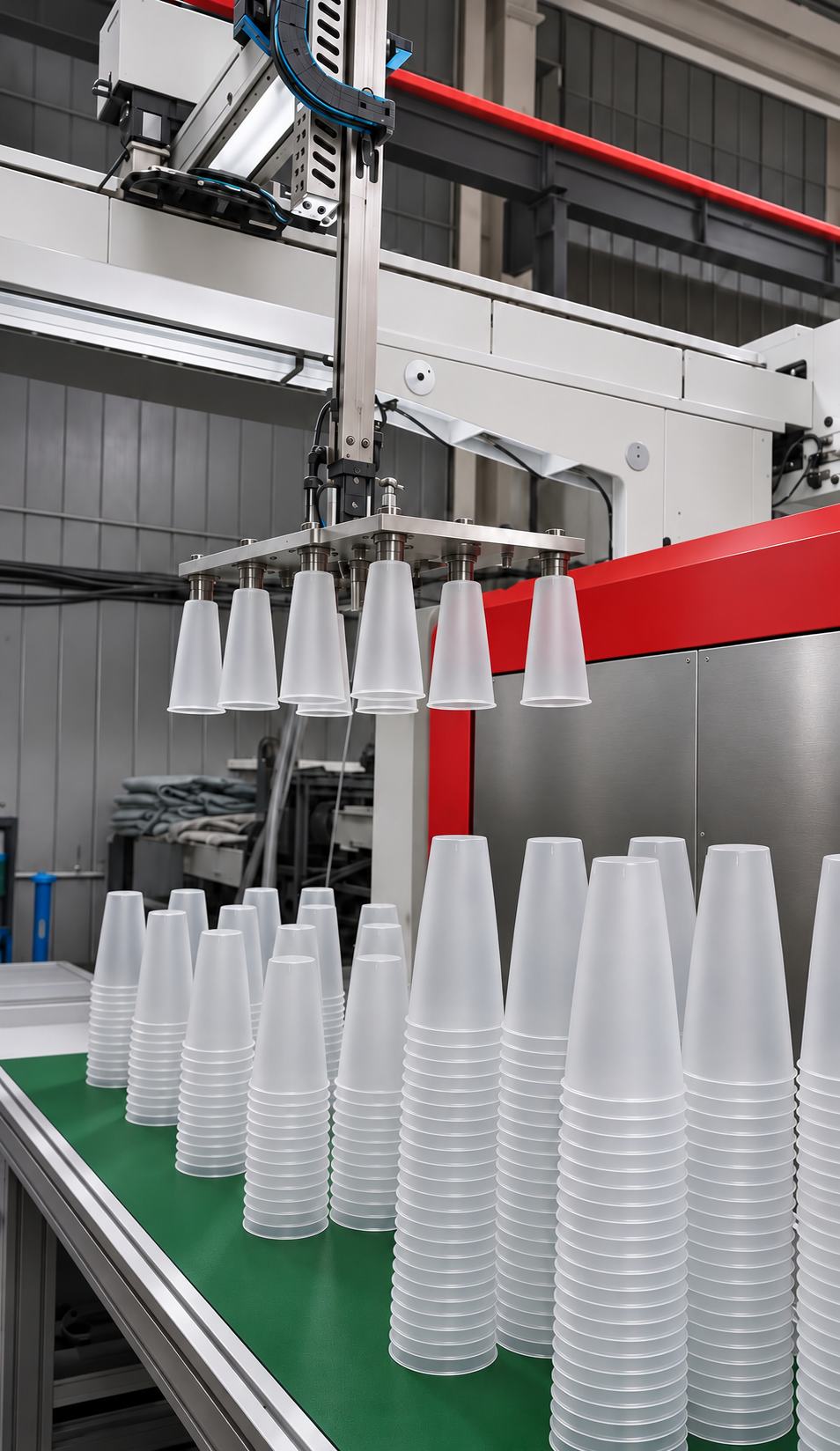
The machine melts the prepared resin and injects it into a closed mold.
The cup cools before the robot removes and nests it.
Uneven filling or cooling can leave an incomplete or distorted rim,
even when the blend is right.
Inspect the full circumference and check whether the molded cups separate cleanly from a stack.
Test how the cup and closure perform
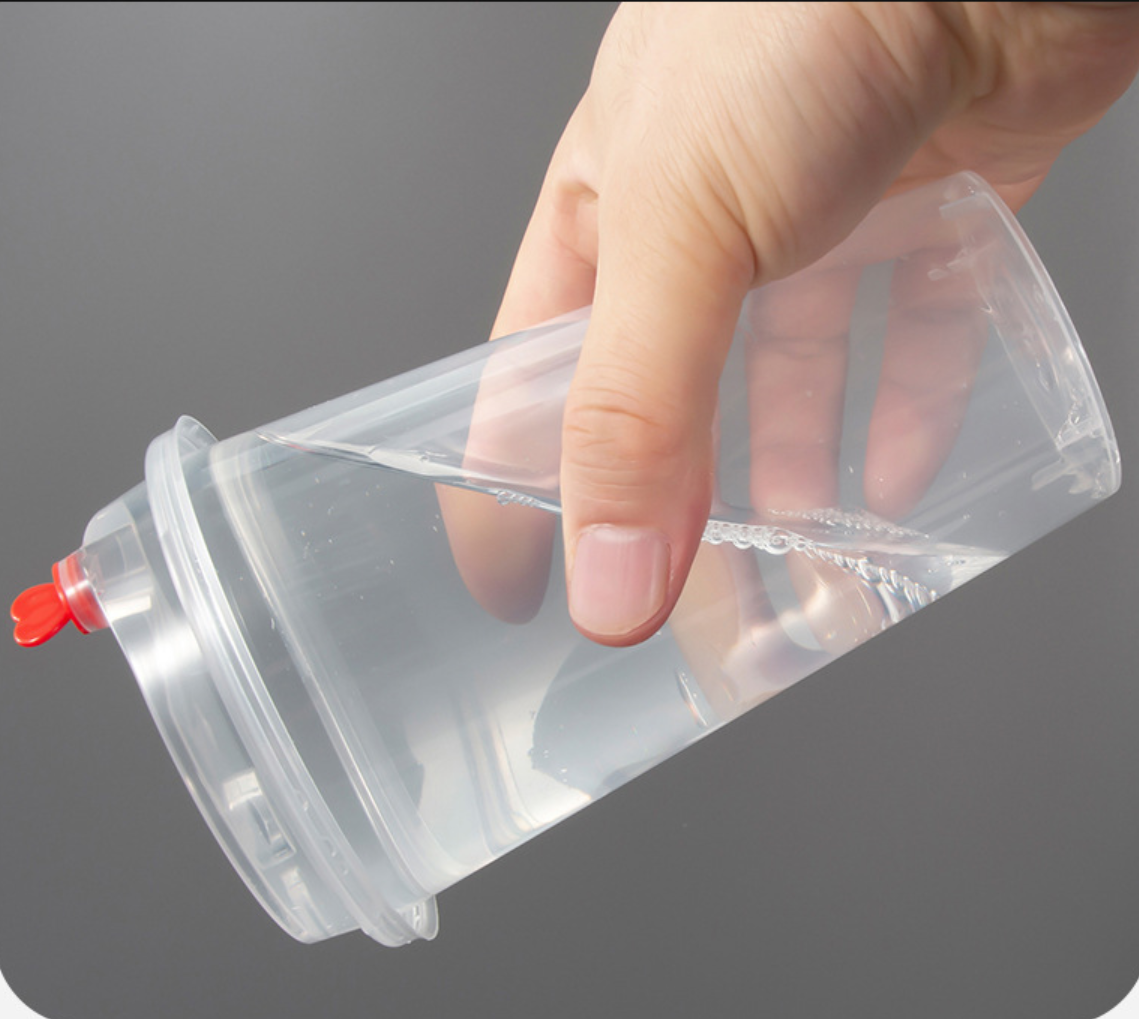
When we evaluate bubble tea cups with lids, we look at what happens when staff close the cup, carry it and tilt it. A rim crack can open as the lid snaps on.
A small distortion can also leave a gap even when the lid looks seated.
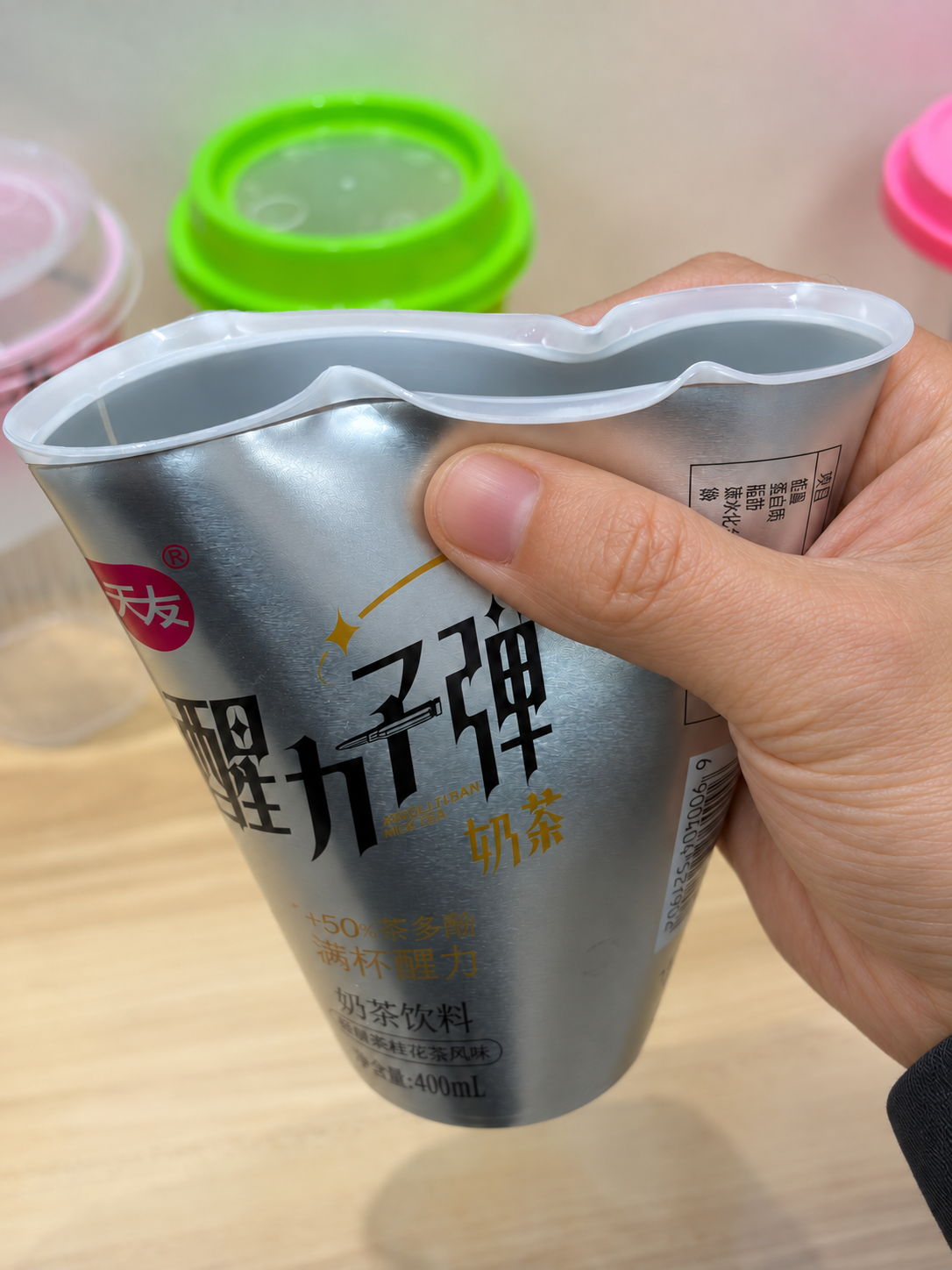
Hand squeeze demonstration of an impact-modified PP sample. The rim bends sharply under pressure and remains visibly intact.
After extensive trials with PP formulations and impact modifiers, we reached our drop performance target for this cup. Filled with a beverage,
the cup withstands a 1-meter drop with no visible cracks, splits or other structural damage. For bulk orders,
we agree on the closure, fill level, beverage temperature, impact surface and drop orientation before confirming this requirement on the approved sample.
Check where liquid can escape
Use the matching lid and the intended fill level and temperature. Check that the lid seats evenly all the way around, then tilt the filled assembly and observe the rim joint and any closure opening separately.
For cups used with sealing film, run the sample on the buyer’s actual sealer and inspect the seal around the rim.
Repeat the closure check after representative handling. When qualifying a new order, agree on the sample size,
handling conditions and what counts as a failure. Record whether the rim cracked, the lid released or liquid escaped, so the factory knows which part to investigate.
Pack for the route and inspect the cups on arrival
A cup that passes a bench test can still arrive damaged. During ocean freight and transfers, a carton can face vibration, repeated handling and load from the cartons above it.
A tightly packed sleeve may transmit pressure through the rims. A loose sleeve may move inside its carton.
Feedback on rim damage led us to try different PP formulations and pay closer attention to sleeve length, stack pressure and carton fit. When cracks appear on the same side across several cups,
photograph the stack before pulling it apart. Record the carton condition, lot and position of the sleeve. That pattern gives the factory a starting point for checking the mold, the pack or the handling conditions.
Compare quotes by the cost per usable cup
Consider two hypothetical shipments of 100,000 cups. A shipment costing $4,000 landed with 8% unusable costs about 4.35 cents per usable cup.
At $4,200 landed with 1% unusable, the cost is about 4.24 cents. The second shipment leaves more stock available for sale before you even count sorting labor or replacement freight.
For a bulk order, agree on the pack before production and examine samples from several cartons when the shipment arrives. Look for split rims, sticking and lid fit.
A receiving check ties the packaging spec to what your stores can actually use.
What to confirm before ordering custom printed plastic cups
A useful quote starts with a sample your team can run in the store. For a custom print, approve the artwork on the chosen clear or frosted cup so you can see how it reads over the drink. Before approving a bulk order, confirm these points with your supplier.
· Cup and beverage. Confirm capacity, mouth diameter, finish, intended drink and filling temperature.
· Lid or film. Provide the matching closure or sealer details. Test it with the cup you plan to order.
· Acceptable performance. Agree on how to check cracking, fit, leakage and separation from a stack.
· Packing and delivery. Confirm the sleeve count, carton configuration and destination. Ask for lot identification on cartons.
· Food contact documentation. Request documents covering the cup and closure for your intended use and destination market.
Planning a cup program for several stores? Share your cup size, lid style, target quantity and destination with Xin Oasis so we can discuss a sample for your operation.